Wednesday, 14 December 2011

Ethnicity - Hotel Babylon

Mise en scene
  • Uniforms
  • Surroundings from the hotel to the staff area
  • Hoover
  • Food
  • Jobs
  • Counting (not being sure of his name)
  • Black higher class members of staff are shown being forgetful
Editing
  • Quick movement between shots to show what is happening everywere
  • Quick movements to show the tension rise
  • Cut aways to show who Ibraham is and how Jackie is talking about
Sound
  • Dialogue, immagrants had a lot less dioalgue then the white members of staff
  • Crescendo  hen the police are getting toward Ibraham
  • Quicker, louder music when she realises Iraham is missing
  • Use of none diagetic music showed the class of the hotel
  • Key in the door, create tensionHoover, foley sound
Camera Angles
  • Pull Focus when he sees the immagration policecome out of the lift
The mise en scene  within this clip expressed the different in ethnicity within the clip strongly, for example the uniforms the people within the clip are wearing. It shows the immagrants wearnig plain outifites which give them the appearence of being cleaners, or matance people within the hotel, rather then having a higher class job which the white/caucasian people have, which is once again expressed using more brightly coloured uniforms (such as purple which expresses wealth and class) and expensive appearing suits creating a binary opposition between the toout the clip, showing at the beginning of the clip, the hotel lobby which has within it expensive furniture,

Section A review

Common errors
  • takenotes properly
  • Lack of terminology (protaganist/antagonist/werisimiltude/realism etc)
  • Waffling
  • too long opening paragraphs
  • Did not stae if the representation was stereotypical
  • Not enough spesific examples
  • to much discussion baout how how immigratants are treated in society (not needed)
  • Arguments weren't strong enough, use Marco 9audience, genre, narrative and representation)
  • No mention of Binary opposition, Todorov's narrative theory
  • Jump cuts

Monday, 12 December 2011

Problems with our Section B essay
  • Lack of terminology
  • Using examples from outdates essays
  • Referencing examples
  • Needed to talk about audience and insitutions
  • Hardware AND content
  • Own opinion
  • Lack of specific examples from case study
Hardware
  • Positive and negative
  • Advances in technology (Iphones, Smartphone, Tablet more accessable) Web 2.0 synergies and convergence
  • Software - specific examples from each insitiution
  • Fanzines (fan magazines made in compition for larger magazines)
  • How they have responded to changing consumer/consumption habits
  • Rise in compition from Twitter and Facebook and how they respond to these
  • Institutions can find out easier about audience due to newer technology (web 2.0)
  • Globalization (able to talk to people from all over the world from the relationship link)
  • Quote "exponential times" (Wesch)
Content
  • Specific examples for convergence (How do NME and MH create prosumers) UGC
  • Multiplatform (being able to consume on different levels (TV, Radio, Magazine etc)
  • Synergy (different companies coming together to help e.g. Facebook, awards show)
  • What awards have they won?
  • Powerful audience
  • Future
NME Figures


Metal Hammer
  • Future PLC today  have operations in the UK, US and Australia creating over 180 special-interest publications
  • Future named top digital publisher with two wins at AOP Awards 2011
  • Our online advertising growth in the UK – some 44% – more than compensated for the continued decline in demand for print advertising (Steve Spring)
  • Overall advertising revenues grew year-on-year, with online’s proportion up from 22% to 31% (Stevie Spring)

Wednesday, 7 December 2011

Section A of the exam

Structure notes on each micro concept (editing, Mise en scene, sound, camera angles)

SPLIT YOUR PAPER INTO 3!
Micro Element          ⇒       Technique used                  Example                   Explain/meaning


Key Terms (Todorov)

Disequilibrium
The period of instability and insecurity in the film's narrative

Equilibrium 
A state of peace and calm, whicoften exsists at the begninning of a film's narrative.

Enigma
The question or mystery that is posed within the film's narrative

Iconography
The objects within a film that are used to envoke particular meanings

 ------------------------------------------------------------------------------------------------------------

      Tv Drama's are based on realism (veridimilitude - the construction of a believeable world)

Editing
  • jumpy between shots, quick shots of people around the room (glances), shot - reverse - shot, 180 degree rule

Sound


Mise en Scene


Camera angles


Audience Demographics

Audience Demographics:


A) - High Ranking Professionals; Lawyers,Doctors,etc
Bankers weekly, expensive cars, financial magazines

B) - Middle colass professionals; middle managers in business, teachers
The Telegraph, perfumes, Car magazines, OK magazine
C1) - Office workers; junior managers, office clerks, bank clerks, nurses, etc
The guardian, Fake designer, low end-high street

C2) - Skilled manual workers; Carpenters, electricians,etc
Power tools weekly, sports, vans/trucks

D) - Semi-skilled and unskilled manual workers; drivers post sorters, labourers
The sun, Everyday necessities, wont buy what they don't need

E) - People subsisting on state benefits; the unemployed, pensioners, etc
Music, fashion magazines , top shop.

Wednesday, 23 November 2011

Opening and closing of my essay

OPENING:
Media as a whole has substantially changed over the recent years with the creation of web 2.0 giving viewers of opportunity to have a say in what is presented online. This change has affected the music magazine business creating websites such as NME.com and metalhammer.com where there magazine information can be presented for the public to see. This change in digital technology has created good and bad opportunities for the magazine business overall giving them a way of aiding there consumers’ needs in more than just the original paper copies of magazines and giving them the opportunity to show views information that could not be put onto paper (videos, galleries etc.) “Technology is shifting power away from the editor’s, the publishers, the establishment, the media elite, now it’s the people who are taking control” - Murdock.

 
CLOSING:
It’s difficult to give a straight answer as to if the magazine business has a steady future, however in my opinion I believe there is still business for the hard copies of magazines, and I believe the business will weaken however it will always be there for consumer demand. Every magazine has an audience for it, of which a high percentage will still want hard copies for practically, collection reasons, preference or anything else. The magazine business is a massive business which has been going successfully for a long time and the loss of it would not only create a massive change within everyday life(could cause the fall of a lot of companies e.g. W H Smiths, newsagents etc.) but it’s also a loss of traditional form of reading and entertainment.

Wednesday, 16 November 2011

Future of Music Magazines Powerpoint Flumperdoodle

Exemplar response to Section B: Magazine Industry

In recent times the media industry has witnessed meteoric rise in new technologies.  The advancement of the internet, for example, as it entered its second phase enables consumers to access media in new and unparalleled ways.  For the magazine industry, this has presented both challenges and opportunities.
Print media is mostly in decline, a worry of course for producers of magazines.  Therefore they must assess just how important technological convergence is for helping their magazine to survive in the long run.
The Future Plc title Metal Hammer is a monthly rock and metal magazine, that has existed since 1994. In that time, Metal Hammer has built a reputation as a bible of both modern and traditional metal music. It’s publisher, Future, is an independent company with a portfolio of magazines aimed at niche market sectors.  As a whole, Future, has performed well in a declining market, with Metal Hammer and Classic Rock reporting increases in circulation, with Metal Hammer reaching a circulation of 50,269 and classic rock 70, 188 (ABC, Dec 08).  Perhaps Futures strategies involving technological convergence have something to do with this success.  One of their ‘pillars’ of business strategies  is to implore upon their existing convergences in order to further appeal to prosumers.  This is important; Future defines ‘prosumers’ as “young men or young-at-heart men (Future licensing.com). In general this demographic will be one of the most technologically involved, in the know about the latest technologies.  They are also, incidentally the most valuable demographics for advertisers.  In this respect, convergence is extremely important for Future and indeed Metal Hammer in retaining advertising revenue.  Advertising revenue has already fallen for Future, as they already saw a 15% drop in advertising from December 08-March 09 (futurelicensing.com, 2009).  It is therefore, vital that they use technological convergences to remain advanced enough to attract advertisers.
Metal Hammer’s target audience is a young audience, interested in music, “converging adults”, according to futurelicensing.com The National Readership survey 08, the latest available, shows Metal Hammer readers to be 64% male, average age 22.  Again, this is an audience that will be interested in many forms of media. So for Metal Hammer to maintain their loyalty they must fulfil their newly evolving needs (Uses and Gratifications, McQuail).
The Metal Hammer website is a demonstration of convergence, and has proved popular with nearly 60,000 individual visitors since starting (futurelicensing.com).  Alex’s web traffic analysis suggests that visitors are mostly male, aged between 18 and 24 and spend around 2.7 minutes on Metal Hammer.co.uk. Therefore the website has apparently targeted the right audience for Metal Hammer.  Users can interact, voting in polls such as “who has the best slipknot mask?”, giving users the sense that they are contributing to a community. They are also educated and entertained with video exclusives, Metallica Live, and Opeth on tour.  In this way convergence maintains interest in the Metal Hammer brand.  Web 2.0 allows users to submit and generate a content, so Metal Hammer has competition in that users can go elsewhere for such videos .  It is up to Convergence in order to provide the best service for users.
Metal Hammer has also had successful synergies created as a result of convergence.  On 2008, Metal hammer.co.uk encourages users to send in photos taken on their mobiles of them playing “Guitar Heroes”, combining the internet with mobile technology.  The guitar hero synergy  combined with a party sponsored by Metal Hammer at the O2 (Metal Hammer.co.uk), Podcasts have allowed content to be sent faster than ever to multi-media formats.
Indeed, distribution is an interesting issue to consider for the magazines industry.  The internet, podcasts and video channels allow readers to access their wanted content within seconds.  Where as hard copies of a magazine must be ordered or brought from a shop. Indeed it could be suggested that the gathering of content from the internet or mobile has replaced the need for buying the magazine itself, as subscriptions for Metal Hammer rose 8% from Dec-march 09 (futurelicensing.co.uk) suggesting there is not the same novelty when buying a magazine. 
However, whilst technological convergence is important for the magazine industry, publishers must consider that the extra content offered to consumers via convergences in technology, could replace the magazine itself.  IPC’s NME is an example of this as circulation dropped 24.1%, whilst its website has been praised for the amount of content on offer.  Metal Hammer has a unique community created by the interacting mode of address; ‘Join the Crusade’ and writing style filled with expletives ‘F*** You!’, readers of Metal Hammer feel a string sense of unrivalled community within the magazine.  The magazine sticks close to its ideologies of anti-establishment , avant-garde by  featuring adverts appropriate to his such as Attitude Clothing and HMV Metal, whilst the website has adverts by O2, Orange and T-mobile.
Overall techno convergence is important as consumers needs alter and change but for the magazine industry to survive they must make any technological advancements not a replacement for the hard copy of the magazine as Future have so far successfully done.  As online advertising reached 18% for future it is important.

Monday, 14 November 2011

Definitions

Web 1.0
Was the first version of the Internet- a one way communication, from the sender to the receiver.

Web 2.0
What we know the Internet to be now - a two way communication between the sender and receiver

Prosumer 
Combination of consumer and producter (NME & Metal Hammer)

Technological Convergance
New technology coming together (Radio online)

Media Convergance
Online community with allows people to share stories, videos etc

Synergy
When companies come together to produce something that couldn't produce on there own e.g. NME Radio, Magazine, TV channal, Sponsers, Tweets, Facebook updates etc

Viral Marketing
A marketing technique aiming at reproduction "word of mouth", usually on the internet and through exsisting social networks.

UGC
Content that has been generated by the user/customer

USP
Unique selling point, making it different to other magazines. 

POD
 Point of difference

UPB
Unique Percieved Benifit - what the consumer believes they will get from the product

Proliferation
A rapid increase in the number of a certain type of product

Multi platform Series
story told over a range of media, magazine, radio, videos, podcasts

Vertical Intergration
Absorption of serveral firms into a single firm


Statistics for the future of magazines

92% US adults read magazines
Consumers spend more then $86 million each week on single copies of magazines
322 million paid supscriptions 2007 and are rising
Magazine lauches surges 10% from 2009
75% teenagers read magazines
54 magazines closed in 2008 decrease of 17% from 2007
Almost a 1/4 of subscriptions are on the internet


Wednesday, 2 November 2011

Skins Analysis

Notes
Going to pub = underage drinking
slow camera movement and focus to show effects of alcohol
Argumentative / causing trouble
focus to show drug use
running from police
cheap / run down looking surroundings
rushing into relationships etc trying to grow up quicker then they are
older people looking down and siappointed
youths happy / care free
not caring about police / still carrying on
police there quickly, waiting for it to happen?

Analysis
The youths within the clip are represented as drug users and being involved in underage drinking within this clip. Minus the obvious (people drinking) this is also shows by using the speed the camera is moving at, the focus of the camera and editing to make the shots look bluury and distorted to give the impression of them being under the influence of something. This use of editing and  camera speed enhances the lack of control and want for freedom expressed stereotypically by teenagers in TV dramas and also later in the clip links it with how the lack of control is used negativeykl, expressing another stereotype of teenagers.

The clip also shows older people as looking down and disappointed in the actions of youths in the current time. This is shows when within the lcip it shows the men drinking the other side of the pub and the man behind the bar as when shows, they are all standing with there arms crossed and glaces towards the youths. This shows not only that the adults are stereotypically grumpy and disappointed with the change in behaviour of youths from there time to the current, but also a slight amount of fear towards them, as the men in the bar came across as not wanting to make full eyecontact with them (glacing out the corner of his eyes to maybe check where they were) and the man behind the bar is shown with his arms crossed, maybe protraying the fact he wants them to be scared of him and trying to have a lsight stand off with them..

Point
Youth is represented through diagenic sound

Evidence
The dialogue is colloquial

Explain
This conforms to a stereotypical view of the young teenagers, that they are rebellious in speaking there own language

Representation of age


Positive
Negative
Youth
Social
Whole life ahead
Physically/mentally able
Adventurous
Stereotypes though media
Controlled/dependant
Hormonal
Under age (age limits)
Impressionable
Old Age
Relax
Free Time
Respect/wise
Stable lives
Forced to retire
Physically/mentally unable
Patronising
Can be patronising
Boring


Old Age


Mise en scene
Country Side
Stair lift
Darker rooms
Tea & biscuits
Whiskey
Walking stick / Zimmer frame
Grey hair
Curlers
Wrinkles
Cinematography
Focus to reflect bad eyesight
Close ups to show wrinkles
Panning / slow movement
Sound
Grammar phone
Creaking
Cracking bones
Formal speak
Complaining
Editing


Youth


Mise en scene
Country Side
Stair lift
Darker rooms
Tea & biscuits
Whiskey
Walking stick / Zimmer frame
Grey hair
Curlers
Wrinkles
Cinematography
Focus to reflect bad eyesight
Close ups to show wrinkles
Panning / slow movement
Sound
Grammar phone
Creaking
Cracking bones
Formal speak
Complaining
Editing

Monday, 31 October 2011

Disablity in TV Dramas

Defination: Someone who is lesser abled or is differently abled due to a mental or physical handicap.

Wednesday, 19 October 2011

Codes and Conventions

Codes:
Signs and symbols that you associate a certain genre with e.g. for horror, knife, mask, blood.

Conventions:
What you expect to happen within a certain genre.

All TV Dramas have the following ingredients:
  • Characters - even particular kinds of characters e.g. at its most simple, good and bad characters.
  • Stories - they all tell stories, whether those stories involve adventure, crime or romance and they often, but not always end happily.
  • The stories are told against familiar backdrops  e.g. homes, police stations and offices (for crime dramas) most of which are created in studios. However most dramas use outside locations to create particular events.
  • Camerawork - particular kinds of shots are used e.g. sequenced involving establishing shots followed by mid shots of characters, shot/reverse shots to show character interaction and in particular, close up to show emotions
  • stories use dialogue to tell the stories. Occasionally monologues are built in 9as voice overs, a character telling a story)
  • music is used yo punctuate the action, create effects (suspense, tension) and underline emotional moments
  • Particular sub genres tend to have items which make them immediately identifiable - police cars, blue lights, operation theatres and scaples, triage/reception areas in hospitals. Icons of the genre, they symbolise the (sub)genre
  • All TV dramas have parallel narratives.

Exemplar Paragraph

A final way in which representations of gender have been displayed is through camera work. For example the low angle looking down on the male in the whole illustrates his vulnerability and helpless position which displays him as subordinate. However a different low angle in conveying the tiger illustrates dominance of man and a hierarchy with the animal being lower. Establishing shots such as before the male jumps looking on in the long distant horizontal plane suggests his thoughts which leads to the male’s hasty decision. An extreme close up on the woman’s face when she’s been knocked down suggest demonstrates her fear and panic further suggesting the women’s weak position compared to the male. A pivot shot is used which creates the effect as the camera is on a fixed position that someone or something would be looking at them for example the dangerous tiger which overall represents vulnerability to the male and the woman.

Tuesday, 18 October 2011

Essay Editing

G322 Candidate Exemplar Response
Date: June 2010
Representation: Gender
Throughout the extract representations of gender are illustrates through various elements such as editing and sound. A mix of dominance and equality is produced through the extract however overall it is conveyed that women are physically subordinate compared to physically strong and stereotypically hegemonic male.

Representations of gender have been clearly illustrated throughout editing. For example a mix of pivot/panorama shots as well as fast tracking shots have been incorporated when the girl is trying to save and protect the male character. This illustrates the fast movement and action of the cut however it may also signify a chaotic environment where women struggle to take and maintain power. Another example of a tracking shot is portrayed when the male character is travelling down the rope. This editing however demonstrates to the audience the thought and power the character has from making a quick rational decision which is a stereotype of male behaviour. A long establishing shot is used which clearly signifies the three male characters in an equal line. The equal line personally connotes equality however as the majority of characters were male this illustrates women inferiorly in serious situations. Near the end of the extract one male in the process of saving a women from another dangerous man however the framing of the cut demonstrates representations of gender. For example the female protagonist was placed significantly behind the male which illustrates the girl’s subordination compared to the male.

The next element which produces representations of gender is through sound.
In one cut once the female had saved the male from the life threatening situation from the dialogue such as “Come on” with a high intensity, provoking the animal, suggests bravery and a strong masculinity. This dialogue may have been said as an attempt to regain status as he’s just been saved by a girl. At the start of the first cut a synchronisation from the strings is displayed when the music matches to the sombre or negative topic. “Let her goby a different male suggest he may think of the male as being superior therefore shouldn’t have to run after her. In this scene within the barn one female protagonist was trying to bribe the male character through dialogue. Therefore this could represent woman being manipulative to convery power in antithesis to males who assert their power in a physical manner.My best coat!” also creates representation of women such as an obsession of appearance and vanity. However positive representations towards woman are also portrayed. For example once one woman has undertaken the stressful experience the other female protagonist says “you okay” which suggests women to be expressive and caring in contrast to males who are minimal with their dialogue. The diegetic sound the dogs barking emphasise the bad situation of the woman conveying the woman’s vulnerability further. This is also emphasised by the harsh sound effects which build and sustain tension creating a climax.

The next factor which displays representations is through mise en scene. Expressions play a key role, for example when the blonde male is approached by the sabre toothed tiger his expression coveys fear leading to a sympathetic response from the audience however this contrasts greatly to the calm and collective expression of the girl, which suggests a swap in roles involving dominance. At the start of the scene the colour intensity is high on the male compared to the grainy background. This demonstrates the natural setting however focuses the attention on the male protagonist which could suggest male superiority. The females clothing (blonde) presents a male style which is in contrast to the stereotypes of a feminine woman, however another female character in the film is represented with a high pride in her appearance which conforms to the stereotype.
This however portrays the different roles and characteristics of women which may have changed in contemporary times. The props such as the heavy machinery emit connotations such as manual masculine feelings. However the female is in charge of the stereotypical male vehicle. Therefore this suggests equality and an improvement of women within jobs and status compared to the traditional domestic duties. Even though the women within the extract portray dominance through props, the male characters continually illustrate dominance. For example the males usage of the guns for example, the shot gun in the barn and the hand gun involving the key protagonists. This contrasts to how the brunette women displays authority by attempting blackmail. Overall this could suggest males and women are equally dominant although just portray it through different criteria.

A final way in which representations of gender have been displayed is through camera work. For example the low angle looking down on the male in the whole illustrates his vulnerability and helpless position which displays him as subordinate. However a different low angle in conveying the tiger illustrates dominance of man and a hierarchy with the animal being lower. Establishing shots such as before the male jumps looking on in the long distant horizontal plane suggests his thoughts which leads to the male’s hasty decision. An extreme close up on the woman’s face when she’s been knocked down suggest demonstrates her fear and panic further suggesting the women’s weak position compared to the male. A pivot shot is used which creates the effect as the camera is on a fixed position that someone or something would be looking at them for example the dangerous tiger which overall represents vulnerability to the male and the woman.
Overall the particular extract conveys elements of representation through various ways of media aspects. In conclusion a mix of equality is suggested overall, however the traditions where the male characters save the day are clearly presented. Although a mix of response from empathy juxtaposed to spite is displayed from the audience involving both genders.
                                                                                
Explanation/Analysis/Argument: 17 /20
Use of Example: 18 /20
Terminology:  6 /10

Monday, 10 October 2011

Merlin Essay

Camera Angles
The use of camera angles to show the difference in class and status within the clip from Merlin is shown at many different points throughout the clip.
The first time the camera angle is used to show class and status is when Merlin is leaving the castle and the camera goes from looking up at him when he is at the top of the castle steps to looking down at him when he is in the market. This use of camera angle is used to show the difference in classes between the two environments more than a change of class for the character as it shows how the public around Merlin in the scene would look at it.  They would see the castle as a higher class place within their town and anyone associated with the castle as higher classed, hence why they (and the camera) looked up when he was there. Once he left the castle and moves to the market it swaps to show the view of the people who live/work in the castle and how they would view the people in the market, looking down on them. Once Merlin is in the market, the camera shows him as the same status and height as the rest of the people there, this is a way of the using the camera to show that within this environment, he is seen as an equal.
The second part where camera angle is used to show class and status within this clip is when Merlin is fighting with the knight. When they are fighting Merlin ducks down a lot, hides and falls onto the floor whereas the knight constantly stands tall and looks down at Merlin. The camera uses a lot of over the shoulder shots during this point to show that the character is looking at the other as higher or lower (the majority being the knight looking at Merlin on the floor) this gives the audience once again the idea that Merlin is lower and also weaker than the knight.

Editing
The location starts off in a very old luxurious castle, one that must be owned by the king or someone very rich. Spooky dark corridors show its old and occasional big beams of light emphasise the fact it has big windows showing it must be a big castle. As Merlin is caught snooping around a very posh lady finds him. Straight away you can tell that she has more money than him by wearing a purple velvet dress, with her hair nicely pruned and covered in jewellery. This automatically shows the audience that Merlin shouldn’t be here and the lady that has found him is much higher above him. 
As the scene changes, Merlin walks down the steps from the front of the castle, this again shows how big the castle is in comparison to him and makes him seem very small. Furthermore the clothes that Merlin wears are old and bedraggled showing that he is a peasant, with scruffy hair and not being the cleanest of people the audience already get the impression that he’s a working boy and he doesn’t live in the best accommodation.
Finally we move onto the final main scene, ‘the fight scene’. The audience can automatically tell this scene is taking place in the peasant’s courtyard.  You can tell this because of the muddiness of the place, the people standing around are all peasant’s and all the props used like little market stalls where the peasant’s will trade there goods. As the person Merlin fights enters the peasant’s courtyard you can tell straight away that he’s not a peasant, mainly because of his costume. Covered in shining armour and blonder waving hair, with men stood behind him in the same costume you can tell that they belong with him and they’re his back-up. Whereas Merlin has a bedraggled woman standing behind him cowardly seeing what’s going on.

Throughout the Merlin extract there are many examples of Rich and Poor people. This is can be shown through the use of editing. The opening scene in Merlin starts off with Merlin in a room the camera pace starts off slow but gradually gets faster cutting back and forth to what Merlin is looking at, this is use of match on action. This match on action is also shown with an eyeline shot, him looking at objects could show his alienness to these different objects to show that he has never seen extravagant things before. Merlin is acting suspicious this is emphasised by the fast pace cutting back and forth this makes the audience suspect that Merlin is not supposed to be in the castle, connoting his lower status. Merlin seems to be intruding the castle this makes us think that Merlin is from a lower class background as he is sneaking around. The suspense is brought up to a climax when the royal woman enters the room. The shots on the royal woman is long shots, this gives us as an audience a clue of her royal status and importance in comparison to him who has shorter shots showing his status. This suspense was shown by the camera pace gradually getting faster and faster. This fast pace shows the importance of the royal woman furthermore this is emphasised by the music working in action with the fast pace. As Merlin exits the castle the editing slows down, this shows he is in his own social class.   
There are many variations of sound in this clip, we start with some low, dark sounds which set the mood and give an indication that the character, Merlin, is possibly doing something he shouldn’t be.
There are shadowy, dark almost ghost like whispers which are showing that there may be something sinister around or that Merlin may be in danger.

Sound
When the old woman comes into the room there is a sudden crescendo in sound which indicates that there should be suspense, when she enters the room the music in the background stops, this may indicate her higher class than Merlin and that she is more powerful than him, also it may have stopped because Merlin may have in fact been caught in a place he should not have been in.
When the old woman looks into the mirror, you see an old woman, to me this signals that something may be wrong because she is possibly pretending to be the younger woman, a witch, perhaps? The sudden shivering sounds show the audience that there may be something wrong; it may also be signalling that Merlin is in danger.
As Merlin leaves the room, there is no music whilst he is in the courtyard or the streets, just many Diegetic sounds such as the horse and carts and the bustling streets, it sets the mood even more and has a happy, natural scene.
When the fight begins, there is exciting, happy music going on in the background, this shows that Merlin and the Knight are just playing around and it’s not going to be a bloody and dangerous fight between the two, they are even, possibly, friends that are having a bit of a humorous fight.
But when the sounds of the weapons crash onto the tables and smash things, the sounds are loud and powerful, showing that Merlin may possibly be in serious danger if it were to be an actual fight.

Mise en scene
The location starts off in a very old luxurious castle, one that must be owned by the king or someone very rich. Spooky dark corridors show its old and occasional big beams of light emphasise the fact it has big windows showing it must be a big castle. As Merlin is caught snooping around a very posh lady finds him. Straight away you can tell that she has more money than him by wearing a purple velvet dress, with her hair nicely pruned and covered in jewellery. This automatically shows the audience that Merlin shouldn’t be here and the lady that has found him is much higher above him. 
As the scene changes, Merlin walks down the steps from the front of the castle, this again shows how big the castle is in comparison to him and makes him seem very small. Furthermore the clothes that Merlin wears are old and bedraggled showing that he is a peasant, with scruffy hair and not being the cleanest of people the audience already get the impression that he’s a working boy and he doesn’t live in the best accommodation.
Finally we move onto the final main scene, ‘the fight scene’. The audience can automatically tell this scene is taking place in the peasant’s courtyard.  You can tell this because of the muddiness of the place, the people standing around are all peasant’s and all the props used like little market stalls where the peasant’s will trade there goods. As the person Merlin fights enters the peasant’s courtyard you can tell straight away that he’s not a peasant, mainly because of his costume. Covered in shining armour and blonder waving hair, with men stood behind him in the same costume you can tell that they belong with him and they’re his back-up. Whereas Merlin has a bedraggled woman standing behind him cowardly seeing what’s going on.

Wednesday, 5 October 2011

Merlin - SOUND

Sound has the power to create certain moods, to create character, can signal events that are about to happen and to muniplate audiences.

Sound has 3 sections
  • Human voice
  • Sound effects
  • Music
These create a balence of realism to make the audience believe what's on screen.

Sound has two sections
  • Diegetic (talking, phones ringing, footsteps)
  • None- diegetic (music) (foley sound - sound effects of every day sounds)
Voice over - someone explaining what is happeneing within the drama
Direct Address - when the characters on screen dirctly address the audience
Incidental Music - helps to provoke emotion for the audience
Dissonant Music - music to show an approching menace or disaster
Parallel sound - music the audience expects to hear
Contrapunal sound - music the audience doesn't expect to hear
Sting - a louder crescendo which enhances the drama of a current situation
Verisimilitude: the believeable logic of the texts world (which appears real)
Diegesis: the world of the TV programme , this is what we see on screen 
Ambient sound - natural asound occuring there they are filming (wind, trees blowing, birds)

Friday, 30 September 2011

Hustle extract analysis


In the clip from hustle gender is represented conforming to stereotypes showing men as more powerful and calm and showing women as lower and trouble makers.
Laura Mulvey’s theory of the male gaze is one of the strong media elements which are used prominently within the clip once the second (blonde) woman enters the scene. This woman within the scene represents the male gaze as its strongest showing her as attractive, young and stereotypically blonde as well as being well spoken, showin she is wealthy and probably had a good education. The woman is shown to be extremely flexible about using her husband’s money (she wasn’t fazed by the price of the dress), showing of expensive jewellery and telling everyone about her husband’s wealth causing the audience to perceive this character to follow with a stereotype of woman not working and needing men in their life, further implied after she loses the ring and says “her husband is going to kill her” proving he has authority over her. The shop assistant also enhanced the idea of the male gaze within this clip as he (although his sexuality is called into question using his job, voice and appearance to exaggerated  this) shows her skin tight, short revealing dresses for what comes across as being for his own amusement. He also is shown to be taller than her, using camera angles to enhance the idea of him looking down upon her when she is trying on the dresses showing that she is an object to be looked rather than the intelligent person she is revealed to be at the end. Mise en scene is a very important part of this clip, as it makes the audience automatically know who is who within the scene. Mise en scene makes it obvious that when the first woman enter the scene, that she is poorer, wearing darker clothes, being older and covering up her body. The main section of the scene in which mise en scene is important is when it shows the men in their club. These men are only shown briefly in short sections throughout the clip therefore mise en scene is the main way in which to show the audience what is happening and who these men are. When we see the men, they are all dressed smart (suits, expensive watches and neat hair styles) and are in a mansion like environment (expensive looking furniture and surroundings) which immediately gives the impression of wealth and power, further implied by when they start drinking out of crystal whiskey glasses. The darkened lighting within this part of the clip also gives the impression of them being calm and mysterious and sets the overall feeling of that section of the clip.

When the blonde woman is first introduced into the scene, the camera focuses in on the ring using an eye-line match to emphasize that this will be an important object of the clip. This eye-line match also works in with the previous part of the clip as it shows a visible binary opposition (Levi Strauss, 1969) with the poorer woman previously shown in the clip. The poorer woman is represented as being lower when she is shown by many things, such as her clothing and attitude in the shop (looking confused as she walks in, being shy towards the shop assistant) and also by the camera angle when the blonde woman walks in the background she is higher up then her despite being in the background and out of focus. Camera angles are also used to emphasize a point when the man walks into the shop using a panning shot to show that he is wearing an expensive suit and that he is a person of importance within the clip. This camera movement also shows the male takeover of the scene, the man taking over the previously predominantly female scene. Another way in which the scene shows the male takeover is the transitions between scenes, normally using a whip effect coving the female scene with the male scene.

Sound is also another important part within the clip, especially the use of direct mode of address, breaking the forth wall within the clip which is unusual for a TV Drama as it is controversial, some people don’t like it as it ruined the realistic  feel of the Drama. Another way sound is used is as a part of the Mise en scene of the shop assistant adding to his impression of not being stereotypically male, making him have a higher voice which added to the overall effect (working in a dress shop, wearing tight fitting suits etc).

Overall, all of these add to the final effect of the scene showing woman as weaker compared to the strong, powerful, relaxed, rich looked men in their club. It shows the woman as lower using camera angles, different voices and sounds, how they dress and how the camera looks at them to give the effect of them (especially the blonde woman) needing men within there lives.


Media terminologys

Binary Oppositions (Levi Strauss, 1969):
Examples
Day/Night
Hot/Cold
Woman using sexuality to get what she wants/ Man using his brain to get what he wants

Voyeur
Watching for pleasure

The Male Gaze (Laura Mulvey, 1973)
How women are made to act/dress for men's pleasure.

Extract: Hustle

Camera Angles:
- When man walks into shop the camera pans over him, showing all of him, making you notice him straight way were as when the woman is first introduced it shows her in the background meaning you might not notice her. Gender representation.


Editting:
- Transitions between scenes, wipe transition showing the man being more powerful (male scene taking over female scene)
- Eye line match on the ring at the beginning


Sound:
- Direct mode of address (breaking the forth wall), getting the audience involved and making them feel like they're in on the hustle.
- Woman has very pronounce English, show she is successful and wealthy

- Shop assistant has a higher voice to show he isn't a stereotypical man


Mise en scene:
- Shop location/Bar location (relaxed, talk, expensive, for higher classes)
- Darker light in the mans shot
- Blonde woman, expensive clothes and jewellery
- All the men were wearing suits, crystal glasses


Woman: Stereotypical, worrying about jewellery, clothes and hair. Spending her husbands money (she isn't successful, he is). Pretty. Mentions husband being angry at her when she loses the ring, showing husband is higher up then her in there relationship. Being used at the end of the scene.

Shop assistant: Not a stereotypical man. Camp. Works in a expensive dress shop.

Monday, 26 September 2011

Homework: Feminism and The Male Gaze


None Stereotypical Female
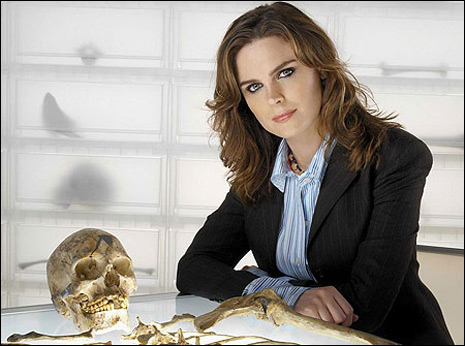
Temperance Brennan Picture
Temperance Brennan is the lead women in the crime-based TV drama Bones. She is a highly intelligent woman who works with a male parter on crime scenes. The majority of the time she telling him what to do or working out the answers to murder cases making her a strong character in the TV show. She always wears suits, which aren't skin-tight or in any way provocative, she never has relationships and never mentions any trouble with relationships and is always focused on her job.


None Stereotypical Male
Simon Bellamy is one of the main characters from teen drama Misfits. Although he is a male lead role (as well as two other males and two females) he is very quiet and shy. He isn't portrayed as being strong, talkative or even intelligent within the shows and often makes mistakes. He isn't muscular (or at least he doesn't show it) and is generally never successful in idea making, helping and sorting out general issues the group come across.


Stereotypical Male 
Dexter Morgan is from the crime-based drama Dexter. He is a stereotypical male lead character being he is clever, strong and protective within the program. He is good looking, physically strong looking and his intelligence is portrayed very well using work, lifestyle and family life. Not only this but within the program, he is a typical man as well, with a wife who looks after his children when he goes out and works.


Stereotypical Female

Gabrielle Solis is one of the lead female characters in TV drama Desperate Housewives. She is a very typical female character in TV due to her stereotypical good looks, lake of intelligence and relationship issues. They have also made her a housewife who stays at home and doesn't work any more however they've incorporated the normal sex appeal into her character by making her a ex model. 

Friday, 23 September 2011

Question when analyzing media texts

  • Who produced it?
  • What/who is represented in the text?
  • How is it being represented?
  • Why was this particular representation selected and what are the alternatives?
  • What frame of reference does the audience use when understanding the  representation?